When Does Wrist Pain Need Surgery? A Simple Guide for Patients

Whenever we have pain in our hand, we all think it’s just a sprain and will heal after a few days. Even though it is not completely wrong, as many pains go away naturally but waiting for too long can sometimes become a big issue. Some injuries can get worse slowly and by the time you go to the doctor, the treatment options get limited.

But it is not so easy to know which kind of pain you have. That is why here is an easy guide on what is normal and what is not normal so you can know when to see a wrist surgeon in Jaipur.

Why Wrist Problems Are So Hard to Understand

When we look at our hand, it looks like a normal joint. But it is not as eight small bones are arranged in a row, held together by ligaments, with nerves running through them and the main vein going to the palm side by a thin passage.

Even a small injury in one corner of the hand can cause pain in the whole wrist because everything inside it is so tightly packed. Sometimes two people have the same pain but their condition can be different.

What Usually Causes the Pain

We all know the most common reason for wrist pain is a fall. You slip in the bathroom or lose balance on a bike and all, it can cause the bones to crack and ligaments to tear.

Other types of causes happen slowly like working on a laptop for long hours, using a phone too much, sewing, cooking for a large family, exercising at the gym and all of these can put too much pressure on the tendons. Problems caused by these can not be solved at home. You will need to see a good wrist pain specialist who will examine the joint and offer you suitable treatments.

Red Flags: When to See a Wrist Surgeon in Jaipur

Don’t panic over every twinge. But do get checked if any of these sound familiar:

  • The pain is still there after six to eight weeks of sensible care
  • Your wrist looks crooked, swollen or has a visible bump after an injury
  • Fingers go numb or tingle again and again
  • You drop things or can’t twist open a bottle cap
  • The joint clicks, catches or feels unstable
  • You wake at night because of the pain

One of these alone isn’t a verdict. A few together are a reason to stop waiting. Nerves in particular don’t recover well if they stay squeezed for months.

Broken Wrists: Why Time Matters

One of the most common reasons for wrist surgery is a fracture. Some fractures are normal where bone remains in place and just normal treatment and rest are needed but some fractures are quite hard to treat as bone fragments are separated and get broken into small pieces that usually need screws or wires.

Many people make the same mistakes that make their fracture get worse like applying a bandage to a sprain and all which makes the bones move in the wrong direction. That is why whenever you think you broke your wrist, foot and ankle surgeon in Jaipur is important to have proper treatment on time.

Problems That Often Need Surgery

  • Displaced fractures

If the broken ends aren’t lined up, surgery repositions and secures them.

  • Scaphoid fractures

There is a little bone close to the thumb that has a bad blood supply. It heals slowly, sometimes not at all so surgery is usually a safe option.

  • Advanced carpal tunnel syndrome

If numbness is constant or the thumb muscle looks thinner, a short release procedure frees the nerve.

  • Ligament or TFCC tears

When a splint doesn’t help, keyhole surgery can repair them.

  • Cysts that keep returning

Removal is helpful if it causes pain and problems with the nerves.

  • Unbearable arthritis

When medicines and injections stop working you should get surgery because it can reduce pain and keep the wrist useful.

How the Decision Gets Made

A careful surgeon won’t say operate in the first five minutes. The first visit is mostly all about talking about your job, your dominant hand, how it started, and what makes it painful. Then comes a hands on check of movement, grip and feeling in the fingers and then they do an X ray, ultrasound, MRI or CT scan if needed.

Unless the injury is urgent, treatment without surgery comes first. And a straightforward wrist pain specialist will also tell you what an operation can’t do, so you’re choosing with open eyes.

What Modern Wrist Surgery Looks Like

Not as scary as people imagine. Arthroscopy uses cuts the size of a buttonhole and a camera about as thin as a pen refill. Broken bones are fixed with small plates and screws. A trapped nerve can be removed through a short incision. Torn ligaments can be repaired or rebuilt and badly worn joints can be replaced. Smaller cuts usually have less pain and can heal with an easier recovery.

Recovery: What to Expect

You’ll wear a splint or cast for a few weeks. Your fingers keep moving from day one, because stiffness creeps in faster than you’d think. Physiotherapy follows to bring back strength and motion. Desk work may resume fairly soon, but lifting, gym sessions and cricket have to wait.

For your surgery you will get a proper schedule from a wrist surgeon in Jaipur. The patients who stick to it and resist the urge to rush almost always do better.

Conclusion: Picking the Right Wrist Surgeon in Jaipur

Not all wrist pain is normal. That is why you should not delay getting the right treatment from the best doctor and for that, ask yourself a few things. Does the doctor treat day to day hand and wrist problems? Make sure they show you your scan and explain it in easy language and you can get imaging, surgery and physiotherapy all in one place so it can save you time.

If your trouble involves the fingers, tendons or nerves of the arm, a Hand Surgeon in Jaipur can look at the bigger picture. And if you also have heel, toe or ankle pain, Wrist Fracture Specialist can offer you the best treatment.

FAQs

1. Can wrist pain go away without surgery?

Usually, yes. Many times, with help of rest, medicine and physiotherapy, most of the pain can be healed without surgery.

2. When should I see a wrist surgeon in Jaipur?

If your pain does not get healed after one or two weeks and you feel pain or swelling in your hand, you should go to the doctor without making any further delay.

3. Does wrist surgery hurt?

You would not feel any pain during the operation as you will be given anaesthesia however, some pain after the surgery can occur, but it is normal and can go away with medicines.

4. Why choose a Wrist Fracture Specialist over a general doctor?

A wrist pain specialist deals with all types of wrist pain every day, so they will have more accurate knowledge about the wrist and will offer more suitable treatment.

5. Can exercise alone avoid surgery?

For normal problems, exercise can help avoid surgery but it cannot fix big issues like a big fracture and all.

Ankle Pain: Causes, Home Remedies, and When to See a Doct

Suppose your ankle hurts every time you take a step or put weight on it. Much ankle pain is normal and can be treated at home with home ingredients, that is why we ignore it. But sometimes it can become a lifetime issue if it is not diagnosed on time. Below, we cover why ankles hurt, what helps at home and when to see an ankle doctor in Jaipur.

Reason for my ankle pain

The ankle looks normal but it seals bones, ligaments, tendons and cartilage into a small area. A problem with any one of them can result in pain. Here are some of the usual causes:

  • Sprains. This is one of the most common reasons for ankle pain, like whenever we take a bad step or twist our leg while playing something or running. Swelling, bruising and a tender area are some of its indications.
  • Fractures. If you feel severe pain whenever you just stand on your leg or it becomes hard to even walk that means you have broken your ankle bone. Some of the reasons are falling, car accidents and others.
  • Tendonitis. When you run, walk or stand for a long day, you will feel something irritating in your leg that keeps getting more painful as the day passes.
  • Arthritis. Both osteoarthritis and rheumatoid arthritis are close to the ankle. Morning immobility, puffiness and pain that slowly builds over months point in this direction.
  • Gout. Too much uric acid in the blood can result in sudden, severe pain with redness and heat usually near the ankle or the base of the big toe.
  • Nerve trouble. A squeezed nerve or tarsal tunnel condition can make the ankle and foot hurt, sting or lose its ability to feel anything touch or things.
  • Everyday strain. Old shoes, high heels, flat feet and excess weight all bring stress to the joint and cause more damage to you.

Things You Can Try at Home

If you have normal pain because of weight or exercise, the given steps are useful:

  • Rest. Do not do anything hard and give yourself time to relax.
  • Ice. Put ice on a handkerchief and use it on your ankle for fifteen to twenty minutes. Do it for some days and make sure not to use ice directly on your body.
  • Compression. Use a proper and flexible bandage to reduce swelling. It should feel secure, not tight.
  • Elevation. When you sit or rest, support your foot above your heart.
  • Light movement. After a day or two, slowly circle the ankle and move it up and down, as long as it feels comfortable.
  • Better shoes. Choose soft footwear with proper angle support.
  • Pain medicine. Some people take medicine but ask a doctor if you have other health problems.

Home care is for normal problems only. If nothing improves after some days, get it checked.

Signs You Should See a Doctor

Do not ignore your ankle pain if you have any of these:

  • You can not stand on the foot or walk normally
  • The ankle looks twisted, different in shape or very swollen
  • You heard a sound when you got hurt
  • You have had pain for more than one or two weeks
  • Your foot feels numb or tingly or looks pale or bluish
  • There is fever, redness or heat around the joint
  • The ankle usually gives way or feels wobbly
  • You have diabetes and notice any change in your foot or ankle

Leaving an injury untreated can result in a weak, unstable ankle, long term pain and early arthritis. When you look for an ankle surgeon in Jaipur, pick someone who examines you carefully, explains what’s wrong in easy words and talks through every option instead of jumping to an operation. Many ankle problems respond well to physiotherapy, braces, or injections. Surgery is usually suggested for severe injuries or cases where other treatment has not worked.

Efforts to find the pain

The doctor will examine your pain and then test the ankle’s movement and whether it is stable or not. A proper checkup means you get the right therapy at the right time. Any experienced ankle doctor in Jaipur will follow the same process.

Easy Ways to Protect Your Ankles

  • Prepare yourself before you exercise
  • Build strength in your calves and ankles
  • Wear footwear that fits properly
  • Be careful on rough ground especially in the dark
  • Keep your weight normal

Conclusion

Ankle pain can occur from something small like a sprain or big like a fracture. Rest, ice and proper care are good for normal pain but pain that remains needs a proper check up. If you want specialist care, the team at Bones and Nerves, led by Dr. Girish Gupta can examine you, find the cause and guide you through therapy. For expert help, consult an experienced Ankle Surgeon in Jaipur.

FAQs

1. How can I tell a sprain from a fracture?

Both cause swelling and pain. When you have a fracture, you will find it hard to put weight on your ankle and it can also look different. Only an X-ray can tell the proper difference.

2. How long does a sprained ankle take to heal?

A mild sprain usually gets healed in one to three weeks. Moderate or severe ones can need six weeks or more, depending on the damage and how well you do the given exercise.

3. Can I walk if my ankle hurts?

Normal and easy exercises are usually good for normal issues. If walking is not easy for you or the ankle does not look normal, rest it and visit an ankle surgeon in Jaipur or another suitable specialist.

4. When do ankle problems need surgery?

Surgery can be needed for displaced fractures, fully torn ligaments, advanced arthritis or pain that has not improved with other therapy.

5. Will ankle pain go away by itself?

Small strains usually do. If the pain keeps returning, lasts for a long period or comes with a bump or fluctuation, make sure to get it checked on time.

Best Orthopedic Surgeon in Jaipur: Top Doctors for Bone, Joint and Spine Care

Bone issues, joint pain and spine discomfort can affect your everyday actions from walking to working on normal tasks. Whether it is normal knee pain, an accidental wound, a fracture, arthritis or back pain, getting the right medical  check up is important for getting the proper treatment.

If you are looking for the best orthopedic surgeon in Jaipur, it is important to look more than just online reviews or normal recommendations. An orthopedic specialist should have suitable qualifications, knowledge in treating your particular condition and a treatment method according to your medical needs.

Best Orthopedic Surgeon in Jaipur


2. Dr. Girish Gupta

He is a professional orthopedic surgeon in Jaipur with knowledge of hand, leg and ankle surgery. His areas of knowledge include orthopedic trauma, tendon and nerve injuries, microsurgery and reconstructive techniques. He has great knowledge in managing difficult wounds and diseases affecting the limbs. People looking for special care for hand, foot or ankle problems can book a consultation with him for a check up.


2. Dr. Ashok Khandaka

Dr. Ashok Khandaka is a professional orthopedic expert working with Khandaka Hospital, Jaipur. His clinical approach covers different types of orthopedic and trauma related conditions. He provides check ups and treatment for different bone and joint problems. Patients can discuss their symptoms and diagnostic reports to understand relevant treatment options.


3. Dr. Akshat Khandaka

Dr. Akshat Khandaka is an Arthroscopy and Arthroplasty Surgeon in Jaipur. He is an expert in processes related to joint diseases and injuries. Arthroscopy can be used to assess certain joint problems while arthroplasty involves joint replacement procedures. Patients with regular joint pain or Locomotion issues can consult a specialist to determine the appropriate treatment method.


4. Dr. Gaurav Dravid

Dr. Gaurav Dravid is an orthopedic consultant practicing in Jaipur. His work involves the inspection and management of different orthopedic conditions. Patients experiencing joint pain, injuries, stiffness or movement related problems can get an orthopedic check up. Treatment is usually planned according to the diagnosis, medical history and different requirements.


5. Dr. Girish Shankar Benare

Dr. Girish Shankar Benare is associated with Orthopedics, Joint Replacement and Trauma in Jaipur. He has years of knowledge in MBBS and an MD in Orthopedics. His areas of expertise include orthopedic trauma and joint related problems. People can consult an orthopedic specialist to understand whether conservative treatment, recovery or surgery is right.


What Does an Orthopedic Surgeon Medicate?

They analyze and handle problems involving the musculoskeletal system including bones, joints, muscles, ligaments, tendons and the spine. Their work can involve non surgical treatment, recovery and, when suitable, surgical methods. Normal problems treated by orthopedic specialists include:

  • Knee and hip pain
  • Arthritis and joint immobility
  • Bone fractures and trauma
  • Sports injuries
  • Ligament and tendon injuries
  • Shoulder problems
  • Back and neck conditions
  • Spine related disorders
  • Joint decline

Some orthopedic departments in Jaipur also provide joint replacement, arthroscopy, sports injury management, fracture treatment and spine care under the same field.


How to Choose the Right Orthopedic Doctor in Jaipur

Choosing an orthopedic doctor should begin with your specific problem. A doctor who mainly focuses on joint replacement can have a different area of mastery from a specialist who primarily treats sports injuries or spine conditions.

Check the doctor’s medical knowledge and skill and understand whether they regularly manage conditions similar to yours. Patients considering knee or hip replacement want to look for a specialist skilled in joint replacement while someone with a regular back problem prefers an orthopedic surgeon with spine expertise.

It is also useful to ask about the analysis process. A proper assessment can include a physical examination, medical history and imaging or other investigations when required. Treatment should be based on the diagnosis in lieu of the presence of pain.


Bone and Joint Care in Jaipur

Bone and joint problems can develop because of injuries, age related changes, arthritis, regular stress or other unknown conditions. Knee pain is very normal and can interfere with everyday activities like walking, sitting down or using stairs.

As per situation, treatment can involve medicine, physiotherapy, activity change, repair, injections or surgery. Joint replacement is one option for certain patients with advanced joint damage, but whether it is suitable depends on the individual’s condition and clinical assessment.

For patients with fractures or traumatic injuries, from time to time orthopedic check ups are especially important. Jaipur hospitals also provide trauma and fracture management services with other orthopedic treatments.


Spine Care and Orthopedic Treatment

Back and neck pain can happen for many reasons, varying from muscle strain to conditions affecting the discs, nerves or spine. Regular pain, numbness or limited movement should be assessed by a proper medical specialist.

A spine focused orthopedic specialist can understand the signs, review diagnostic reports and decide whether conventional management, physiotherapy or another treatment method is right. Surgery is not automatically required for every spine condition the right treatment depends on the analysis and rigor.

When looking for the best orthopedic surgeon in Jaipur, patients should therefore consider whether the doctor has experience suitable to their particular bone, joint or spine concern in lieu of depending only on a general title.


When Should You See an Orthopedic Specialist?

You should consult an orthopedic specialist if you have regular joint or bone pain, repeated swelling, problem moving a joint, a supposed fracture, an injury that does not improve or continuous back or neck pain.

You should also get medical care after a serious injury especially when you have unbearable pain, observable disfigurement, inability to put weight on a limb or significant limitation of movement. Early checkups can help identify the unnoticed problem and allow the doctor to discuss suitable treatment options.

Conclusion

The right expert depends on the disease, required treatment and the doctor’s suitable area of Know how.

When booking a consultation, consider the doctor’s credentials, area of mastery, knowledge, hospital facilities, diagnostic support and treatment methods. You can also ask what treatment options are available and what recovery or repair can involve.

The objective should be to find an orthopedic expert like Dr. Girish Gupta who can properly understand your condition and explain your treatment choices properly. For bone, joint and spine problems, an informed consultation is important for proper care and recovery.


FAQs

1. How do I choose the best orthopedic surgeon in Jaipur?

Look at the doctor’s qualifications, suitability of profession, knowledge, hospital or clinic facilities and experience with conditions similar to yours. Your choice should be according to your personal medical needs rather than just because of rankings.


2. When should I see an orthopedic doctor?

You can book an orthopedic consultation for regular bone or joint pain, a bump, immobility, fractures, sports wounds, problems moving a joint or continuous back and neck problems.


3. Do all orthopedic problems require surgery?

No. Depending on the analysis, treatment can include medication, physiotherapy, restoration, activity changes or other non surgical methods. Surgery is considered when clinically suitable.


4. What conditions does a spine specialist treat?

Spine specialists can understand conditions involving the back, neck, discs, nerves and spinal structure. The right treatment depends on the analysis and the seriousness of the signs.


5. What should I take to an orthopedic consultation?

Bring past medical data, X rays, MRI or other important information, a list of recent medicines and details about your illness. This can help the doctor understand your medical information about the hand or foot and make a more informed treatment plan.

What Is the Fastest Way to Relieve Hand Pain?

Hand pain can be difficult to perform daily activities. Hand pain caused by overuse, injury, arthritis, nerve compression and repetitive hand movements is a priority to get the fastest relief from the pain.. Bones & Nerves will know how hand pain can impact your life, and will provide you with highly skilled guidance and treatment so you can get better in haste.

Understanding the Causes of Hand Pain

Before trying to find the quickest remedy for hand pain, you’ll be able to better understand the cause of it. Common causes include:

  • Repetitive strain injuries
  • Arthritis
  • Tendonitis
  • Carpal tunnel syndrome
  • Sprains and fractures
  • Nerve compression

Knowing the cause is imperative to help to determine the best possible treatment strategy.

Rest and Avoid Strain

Relieving hand pain is one of the fastest ways to do so is to provide the hand with rest. Prevention of aggravating activities can help reduce the inflammation and heal more quickly. Try not to do repetitive activities or lifting heavy until pain subsides.

Rest allows damaged tissues to recover and can significantly reduce discomfort within a short period.

Apply Ice for Immediate Relief

Ice therapy is frequently regarded as the quickest method for alleviating hand pain from inflammation and trauma. Several ice packs in a day will help to decrease swelling and dull the painful area for 15–20 minutes at a time.

Wrap the ice pack in a cloth at all times to avoid skin getting in direct contact with the ice pack.

Use Compression and Elevation

Elevation and compression bandages may help decrease swelling and increase circulation. Elevating the hand above the heart level can help heal hand injuries.

In the initial phases of the injury, the RICE approach is recommended to help alleviate hand pain: rest, ice, compression, and elevation.

Gentle Hand Exercises and Stretching

After the pain and swelling heal, stretching will be used to increase flexibility and decrease stiffness. Hand exercises build muscles and improve blood flow, for better recovery.

But don’t exercise if it causes much more pain. A Bones & Nerves specialist will be able to tell you what exercises would be suitable for your condition.

Over-the-Counter Pain Relief

Pain and inflammation can be treated with an analgesic anti-inflammatory medications. Medications may be the quickest way to help hand pain for some, particularly those who experience the pain primarily from an inflammatory condition.

Take always the correct dosage and when the symptoms persist it is advisable to consult with a health care professional.

When to Seek Medical Attention

When any of the following symptoms occurs, there may be a problem and a professional needs to be consulted: Hand pain, severe, persistent and/or numbness, weakness and reduced movement.

Our specialists at Bones & Nerves can accurately diagnose the underlying cause of your hand pain and develop a treatment plan that is unique to you to alleviate hand pain for good.

Conclusion

Rest, ice therapy, compression, elevation, and proper medical treatment are usually the quickest remedies for hand pain. While minor hand pain may improve with home remedies, persistent or worsening pain should never be ignored. Early diagnosis and timely treatment can help prevent complications, restore normal hand function, and speed up recovery.

If you are experiencing ongoing hand pain, consult Dr. Girish Gupta – Hand Surgeon in Jaipur for a thorough evaluation and personalized treatment plan. At **Bones & Nerves**, our goal is to provide effective hand pain relief, restore mobility, and help you get back to your daily activities as quickly and safely as possible.

FAQs

1. What is the fastest way to relieve hand pain at home?

Here are a few tips that can help to ease the pain faster: Keep the hand at rest, icing the affected area and avoiding activities that make the pain worse.

2. Can hand pain go away on its own?

Resting helps the pain if it is not that bad, or it will not last long; if the pain is bad or it will last long, it should be seen by a specialist.

3. When should I see a doctor for hand pain?

If pain lasts a few days or gets worse or if there is numbness, weakness or swelling, seek medical help.

4. Does ice or heat work better for hand pain?

Ice is usually the best treatment for new injuries or swelling, heat may be beneficial for chronic stiffness or arthritis.

5. Can nerve problems cause hand pain?

Yes. Pain and numbness and tingling in the hand may develop as part of another nerve compression syndrome (e.g., carpal tunnel syndrome).

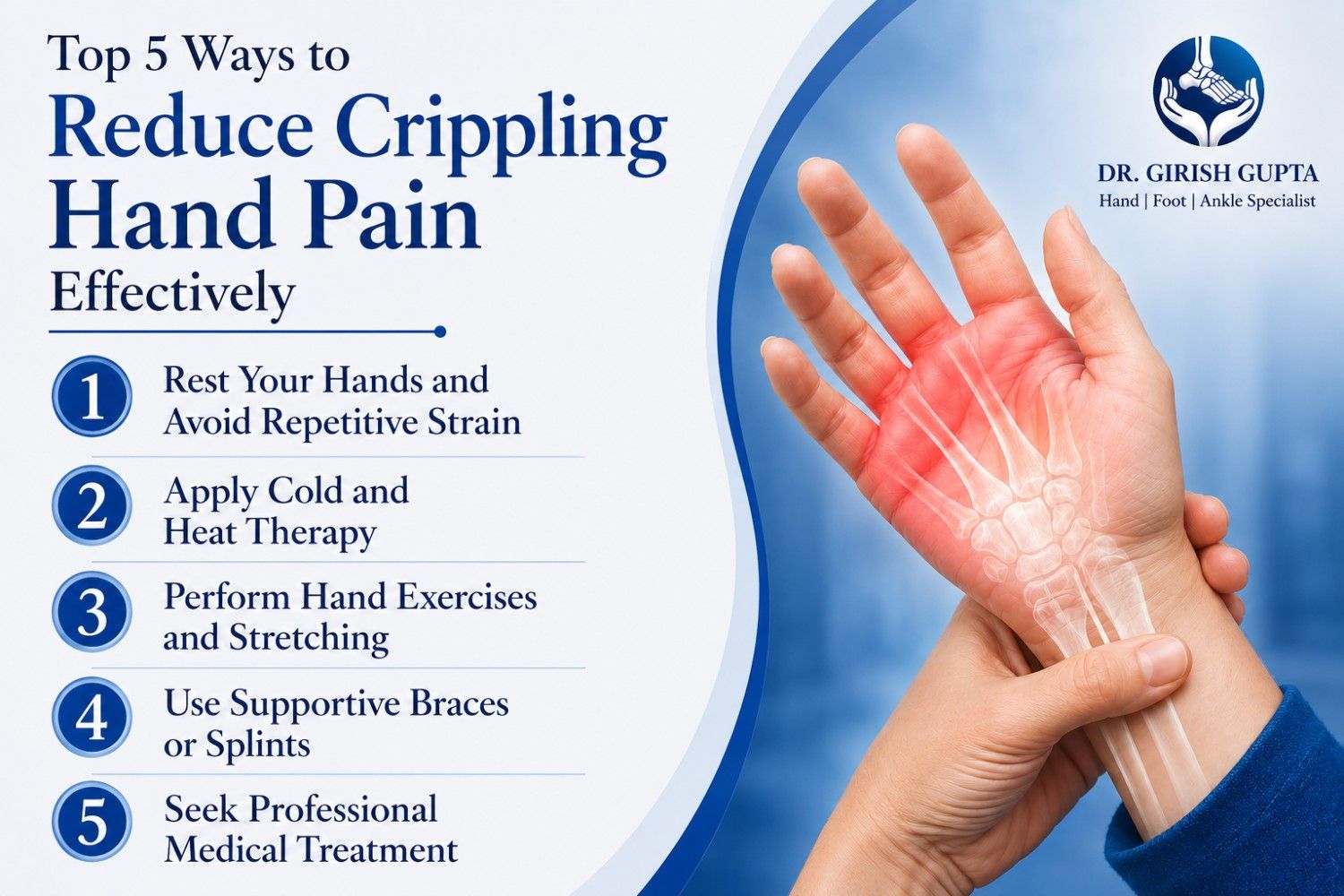
Top 5 Ways to Reduce Crippling Hand Pain

Any hand pain can make even the most basic activities difficult. Discomfort can make tasks like writing, typing, cooking and lifting difficult. Whatever the cause of the pain, the right measures can help decrease crippling hand pain and enhance the quality of life. We firmly stand the philosophy that early intervention and proper care are vital to hand health down the road at Bones & Nerves.

1. Rest Your Hands and Avoid Repetitive Strain

Treating any pain that has become debilitating in the hands is all about rest. Too much use of a tool or prolonged typing or texting can place excessive stress on the joints, tendons and nerves.

Make frequent breaks during the day and use correct hand positions for activities. The other measures include using ergonomically designed tools, and ensuring your workstation is set up correctly to prevent additional strain and discomfort.

2. Apply Cold and Heat Therapy

Cold and/or heat therapy may help a considerable amount, depending on the cause of the pain. Ice packs put on body help to reduce inflammation and swelling, and warm packs applied to body help to promote circulation and relieve tight muscles and joints.

Trying cold and hot therapy can help manage hand pain symptoms, for those who are seeking a simple way to do this. Put a piece of cloth between your skin and pack to prevent skin irritation.

3. Perform Hand Exercises and Stretching

Hand exercises can be used to improve flexibility, strengthen muscles and ensure joint mobility. Stretching is most beneficial for those with arthritis or overuse injuries.

Hand therapy will be provided every day which will help to relieve hand pain that is debilitating, by improving blood circulation and loosening the joints.

4. Use Supportive Braces or Splints

Hand braces and splints can be used to reduce the stress on irritated tissues and to support broken joints. They are particularly beneficial for carpal tunnel syndrome, tendonitis, arthritis and more.

Bracing during activity or at night can help stabilize the hand and help to decrease crippling hand pain. The right support device can also help to avoid further injury and to enable tissues to heal properly.

5. Seek Professional Medical Treatment

An expert will be able to properly diagnose the cause and suggest treatment options. Treatment will vary by condition and may include medications, physical therapy, injection or surgery.

The most important step to take to reduce the pain and prevent further problems is to obtain a professional diagnosis. The treatment plans that our professionals at Bones & Nerves will make will be individualized for each person, to restore hand function and comfort.

When Should You See a Doctor?

If any of these apply, it is advisable to seek the advice of the hand specialist:

  • Hand pain has been present for over a couple of weeks.
  • The affected area swells, becomes numb or tingling.
  • Weakness in grip.
  • Becoming difficult with daily activities.
  • After an injury or trauma, the pain sets in.

Early diagnosis can make a big difference in the alleviation of crippling hand pain and in treatment success.

Conclusion

Hand pain can impact all aspects of daily living; however, there are many treatment options and self-care strategies that can help. With rest, heat and cold treatment, the right exercises, proper braces, and professional medical treatment from an experienced Hand Surgeon in Jaipur, you can decrease painful hand issues and improve hand function. At Bones & Nerves, our goal is to provide patients with lasting pain relief, advanced hand care, and a better quality of life.

FAQs

1. What causes severe hand pain?

Arthritis, carpal tunnel syndrome, tendon injuries, fractures, nerve compression or repetitive strain injuries can lead to severe pain in the hand.

2. Can hand exercises help reduce hand pain?

While it can be made more flexible and less uncomfortable with the proper stretching and strengthening exercises, they must be performed correctly.

3. When should I see a doctor for hand pain?

If the pain persists, gets worse or if the pain is accompanied by numbness, weakness or if it is interfering with normal functioning, medical attention should be sought.

4. Are braces effective for hand pain?

Hand braces and splints may be helpful for supporting, relieving strain and controlling conditions like arthritis and carpal tunnel syndrome.

5. Can surgery be required for hand pain?

An operation may be considered if conservative methods have not helped to relieve symptoms or if the structure is damaged.

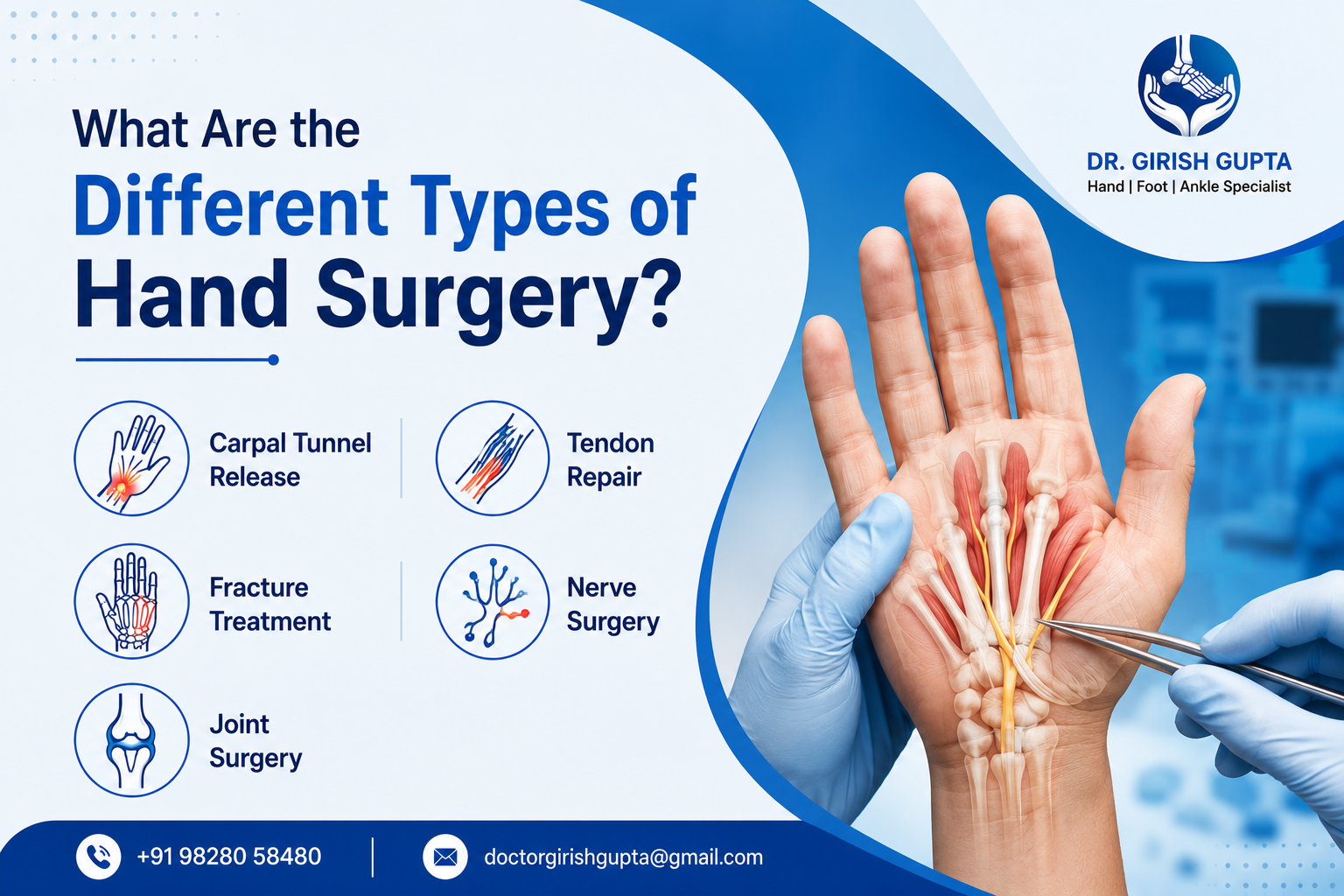
What Are the Different Types of Hand Surgery?

The hand is a very complicated structure, with bones, joints, tendons, ligaments, nerves and muscles all intertwined and working together to perform the functions of daily life. If injuries, deformities or medical problems impair hand function, surgery may be necessary to alleviate pain and enhance quality of life.

At Bones & Nerves, our hand and upper extremity specialists have the expertise to provide the patient with highly skilled treatment to restore strength, mobility and confidence in a variety of hand and upper extremity conditions.

1. Tendon Repair Surgery

Tendons attach muscles to bones and enable the fingers, hand and wrist to move. These can become strained, as a result of deep cuts, sports injuries or accidents and can make it difficult to bend or straighten fingers.

One of the most common types of hand surgery is Tendon Repair, the surgery is a procedure that is aimed at reconnecting the torn tendon and restoring its functions.  Early treatment can result in better recovery and movement of the hand.

2. Nerve Repair Surgery

Sometimes injuries to the hand can lead to damage to the nerves, causing a loss of feeling, weakness or tingling in the hands. If the nerve needs to be repaired to reconnect the segments, or if another nerve has to be transplanted into the area, surgery may be required to accomplish this.

This is one of the most important types of hand surgery because if the nerve is not working, then the fine motor control and sensation in the hand are compromised.

3. Fracture Fixation Surgery

If the fracture is severe or unstable and is in the hand, fingers or wrist, a surgical treatment may be required. Plates, screws, wires or pins will hold the bones in place until they heal.

One of the popular Hand Surgery procedures used to restore the function and alignment of fractured parts is fracture fixation.

4. Carpal Tunnel Release Surgery

Carpal Tunnel Syndrome is when the median nerve is compressed as it travels through the wrist. Symptoms can range from pain, numbness, tingling and weakness in the hand.

The carpal tunnel release can release pressure on the nerve by cutting through the ligament which makes the roof of the carpal tunnel. One of the most effective Types of Hand Surgery for patients that continue to persist with symptoms that are not resolved using conservative treatment.

5. Joint Replacement and Arthritis Surgery

Arthritis may cause a lot of pain, stiffness and decreased movement in the hand and fingers. In the most severe cases doctors might suggest joint fusion or replacement surgery.

These Hand Surgery Types aim at minimizing pain and enhancing hand functioning, so that the patient could enjoy the normal life with ease.

6. Trigger Finger Release Surgery

In the trigger finger, the finger locks in a bent position, and then snaps back into an extended position. The condition is a result of an inflammation of the tendon sheath.

For the trigger finger, surgery is performed to release the constricted tendon sheath, to permit easy movement of the tendon. It is a one of the successful and minimal invasive Types of Hand Surgery.

7. Reconstructive Hand Surgery

Reconstructive surgery is done to fix a birth defect, a major injury, a severe burn or loss of tissues. The surgeries can include skin grafts, tendon and bone reconstruction, or microsurgical procedures.

Reconstructive surgery is one of the most advanced types of hand surgery, which can help restore function and appearance.

When Should You Consider Hand Surgery?

If you notice that you have these symptoms, you might need a hand doctor:

  • Persistent hand pain
  • Numbness or tingling
  • Difficulty gripping objects
  • Limited finger movement
  • Hand deformities
  • Fractures or tendon injury that is severe

The sooner you can get a referral to a Bones & Nerves specialist, the better the chances of a successful treatment.

Conclusion

There are many hand surgery types that can be used to treat a variety of conditions, ranging from fractures and nerve damage to arthritis and tendon injuries. Advanced surgical procedures can significantly improve hand function, reduce pain, and help patients return to their normal daily activities. If you are looking for an experienced Hand Surgeon in Jaipur, early consultation with a specialist can make a significant difference in achieving successful treatment outcomes and faster recovery. Prompt diagnosis and expert care are essential for restoring strength, mobility, and overall hand function.

FAQs

1. What are the most common types of hand surgery?

This involves surgeries such as tendinous repair, nerve repair, fracture fixation, carpal tunnel decompression, and surgery for a “sticking” finger.

2. Is hand surgery painful?

Typical recovery from anesthesia that is given during surgery and pain medication and rehabilitation following the surgery.

3. How long does recovery take after hand surgery?

Recovering will depend on the nature of the surgery and extent of the condition. May be delayed for a couple of weeks to several months.

4. Can hand surgery restore full function?

Patients do often feel a great improvement in strength, ease of movement and pain, but this depends upon the nature of the condition and the treatment.

5. When should I see a hand surgeon?

If you have pain or numbness, weakness, deformity, or trouble using your hand in everyday activities, seek help from a doctor.

How to Recover Faster After Orthopedic Surgery

This is because it is a well-liked subject and has already featured in several journals and magazines. 

It might sound challenging to heal following an orthopedic surgery, yet with the necessary attitude, you will manage to heal sooner and be back on your regular lifestyle sooner. It may be a knee replacement, a fracture repair, or even a ligament surgery, but proper recovery measures should be taken.

Dr. Girish’s guide includes How to Recover Faster After Surgery, practical Tips to Recover Faster After Surgery, and an outline of a clear Recovery Timeline After Orthopedic Surgery to help you keep track. 

The Importance of Recovery Following Orthopedic Surgery.

Orthopedic surgery is surgery of the bones, ligaments, joints, and muscles, all of which require time and attention to heal. Premature recovery or not adhering to medical advice can lead to such complexities as rigidity, infection, or slow recovery. 

An organized recovery program guarantees:

  • Faster healing
  • Less pain and swelling.
  • Increased movement and muscle power.
  • Reduced chances of complications. 

The Recovery is Faster After Surgery.

These are crucial measures to aid a faster and easier recovery: 

1. Adhere to the Instructions of Your Doctor. 

Every operation is individual, and thus one-on-one guidance is noteworthy. Take medications as directed and follow up on appointments.

Example: ACL surgery: This is because when you fail to go through physiotherapy, walking ability may take longer to normalize.

2. Give Sleep and Rest a priority

It is during rest that your body mends itself. Goal: 7-9 hours of good sleep each day.

3. Maintain Proper Nutrition

One of the most important components of healing is to eat well.

Include:

In tissues, proteins (eggs, chicken, and lentils) are repaired.

Vitamin C (oranges, lemons) strengthens collagen.

Strength of the bones—calcium (milk, paneer).

4. Stay Hydrated

Water aids in cleansing out toxins and aids in the general healing.

5. Manage Pain Effectively

Take prescribed painkillers and ice packs as advised. Pain should not be neglected because it may restrict movement and retard recovery.

Tips for Faster Healing After Surgery

To get better, you need only little things that you can do every day:

✔ Start Physiotherapy Early

Directed movements will aid in re-establishing motion and avoiding rigidity.

Example: Simple bending exercises enhance the flexibility in weeks after knee surgery.

✔ Keep the Surgical Area Clean

Wound care decreases the chances of infection.

✓ Smoking and Alcohol.

They both have the ability to delay healing and complicate matters.

✔ Use Support Devices

Crutches, braces, or walkers can be used to help you move safely during recovery.

✔ Be Hopeful and Tolerant.

Mental health is important. Stress may delay recovery, and therefore, keep a positive attitude.

Postoperative Orthopedic Rehabilitation.

The time to recover is different based on the operation type, age, and general health. The following is a rough schedule:

Week 1-2: First Healing Period.

Pain and swelling are common.

Example: A patient who has undergone hip replacement can probably walk on his/her own in 6-8 weeks, but complete recovery will be achieved in 6 months.

Week 3–6: Mobility Improvement

Slow progress of motion.

Physiotherapy is made more dynamic.

Less pain and swelling.

Week 6–12: Strength Building

Improved mobility and strength

Go back to normal daily activities.

3–6 Months: Functional Recovery

The majority of patients resume normal movement.

Routine work or resume.

6–12 Months: Full Recovery

Full recovery and restoration of strength.

Examples: A patient that has undergone hip replacement may be in a position to walk on his/her own after 6-8 weeks, but complete recovery will be achieved after 6 months.

Do’s and Don’ts After Surgery

Safe healing is important through following the right habits.

Do’s

Follow your doctor’s advice

  • Take medications at the right time.
  • Become used to exercising regularly.
  • Eat a balanced diet
  • Keep follow-up appointments

Don’ts

  • Don’t skip therapy
  • Do not sit/lie in one position so long.
  • Neglect not abnormal pain and swelling.
  • Avoid self-medication

Examples: Lifting heavy weights too soon after shoulder surgery may be risky because it may damage the tissues that are in the process of repair.

Exercises to do after orthopedic surgery.

Exercise is also necessary, although it needs to be done cautiously and with supervision.

1. Range of Motion Exercises.

Assistance to enhance flexibility and movement of the joints.

Case in point: Straightening and bending of the knee after knee surgery.

2. Strengthening Exercises

Muscle support of the affected area.

Example: Shoulder surgery, light resistance band exercises.

3. Walking

It is one of the most effective and the safest recovery exercises.

4. Stretching

Eliminates stiffness and enhances flexibility.

5. Low-Impact Activities

  • Swimming
  • Cycling

When your doctor permits it, these are best.

Missteps to steer clear of when recovering.

Ignoring physiotherapy

Going back to work prematurely.

Malnutrition and water shortage.

Not taking medications properly

Overexertion

Example: Patients who do not receive rehab usually take longer to regain normal mobility.

Contact Your Doctor.

Attend to a doctor in case you observe the following:

Pain or swelling that is severe.

Symptoms of infection (redness, fever)

Pain on movement of the joint.

Abnormal exudate of the wound.

Read Also – Foot and Ankle Pain: Causes, Effective Treatment and Symptoms

Final Thoughts

Orthopedic surgery is not a quick solution and, hence, takes time to heal. With these tips to heal faster after surgery, understanding recovery timelines after orthopedic surgery, and following proper dos and don’ts, you can significantly enhance your healing process. If you are looking for expert care, consulting an experienced orthopedic surgeon in Jaipur like Dr. Girish Gupta can ensure the right guidance and a smoother recovery journey.

Tips to Maintain Healthy Bones and Joints

The importance of living pain-free and active life is to have strong bones and flexible joints. With old age, the level of bone density fades away and joints can become stiff due to the lack of proper care. Nevertheless, skeletal system protection and long-term orthopedic health can be ensured with the proper lifestyle habits, diet, and physical activity.

In Bones And Nerves, professionals state that the most effective method of preventing problems with bones and joints in the future is prevention at least in early stages. Here you will discover some tips in a Bone Health Guide and Joint Health Guide which will be useful and simple to follow in maintaining your Healthy Bones and Joints in many years to come.

Why Bone and Joint Health Matters

Bones support the body, safeguard the body organs and hold vital minerals such as calcium. The joints are mobile and flexible. When the bones become weak or the joint inflamed, even simple activities like walking, lifting or even sitting in a comfortable position may be a challenge.

The problems of poor bone care include:

  • Reduced bone density
  • Stiffness and inflammation of joints
  • Increased risk of fractures
  • Mobility problems

Correct Bone Health Advice and Joint Health Advice is useful in keeping Strong Bones and also enhances the overall Orthopedic Health.

1. Eat a Bone-Healthy Diet

The role of nutrition in the Healthy Bones and Joints is significant. Bones need minerals and vitamins that are crucial to their being strong and dense. 

Key Nutrients for Bone Health

Nutrient Benefits for Bones & Joints Food Sources
Calcium Makes bones stronger and eliminates bone loss Milk, yogurt, cheese, almonds
Vitamin D Helps body absorb calcium Sunlight, eggs, fish
Magnesium Supports bone structure Nuts, seeds, whole grains
Protein Builds tissues and muscles supporting joints Lentils, beans, eggs
Omega-3 Reduces joint inflammation Flaxseeds, walnuts, fish

Example: The basic breakfast consisting of milk, oats, and almonds will meet the requirements of calcium, magnesium and protein essential to Strong Bones.

The specialists at Bones And Nerves suggest consuming these nutrients on a daily basis to enhance Orthopedic Health in the long term.  

2. Stay Physically Active

One of the best Bone Health Tips is exercise. The consistent exercise of the muscles of the bones makes them strong, the joints more flexible, and the stiffness decreases. 

Best Exercises for Bone and Joint Strength

  • Walking
  • Cycling
  • Yoga
  • Strength training
  • Swimming

These exercises enhance blood circulation and keep bones and joints healthy.

Examples: A daily walk that takes 30 minutes is useful in raising bone density and maintaining the flexibility of the joints.

Simple Weekly Activity Plan

Day Activity Benefit
Monday Walking Improves bone density
Tuesday Yoga Enhances joint flexibility
Wednesday Light strength training Builds muscle support
Thursday Cycling Improves mobility
Friday Walking Maintains joint movement
Saturday Stretching Prevents stiffness
Sunday Rest or light yoga Recovery

Bones and healthy joints are strong and this is achieved through consistent activity.

3. Maintain a Healthy Body Weight

The overweight condition strains the joints, particularly the knees, hips and the ankles. This may cause damage and pain in the joints in the long term.

Maintaining a normal weight helps in alleviating stress to the joints and enhancing Orthopedic Health.

Example: A person who loses even 5–7 kg can significantly reduce pressure on knee joints.

Tips to Manage Weight

  • Avoid excessive processed foods
  • Eat balanced meals
  • Stay physically active
  • Drink enough water

These small changes support Healthy Bones and Joints and prevent long-term joint problems.

4. Get Enough Vitamin D

Calcium absorbs vitamin D. The body cannot be able to build Strong Bones without it. Vitamin D deficiency is experienced by many individuals because of the absence of sunlight.

Easy Ways to Get Vitamin D

  • Expose yourself to sunlight between 15 and 20 minutes per day
  • Consume eggs and fish rich in fats
  • Take supplements on the suggestion of doctors

Experts working at Bones And Nerves usually mention vitamin D among the top tips of Bone Health.

5. Avoid Smoking and Excess Alcohol

Some of our lifestyle tendencies undermine the bones and destroy joints.

Negative Effects on Bone Health

Habit Impact
Smoking Reduces bone density
Excess alcohol Interferes with calcium absorption
Sedentary lifestyle Causes joint stiffness

These restrictions will safeguard Healthy Bones and Joints and improve long-term Orthopedic Health.

6. Practice Good Posture

Bad posture causes stress of the joints and back. Long sitting posture influences the posture of the spine.

Posture Tips

  • Sit with straight back
  • Keep feet flat on the floor
  • Do not stoop when operating gadgets
  • Ergonomic seating at work

Example: Office workers who maintain proper posture reduce the risk of neck and back pain.

7. Stay Hydrated

Water is significant in lubrication of joints. The rate of water is high in cartilage of joints.

Dehydration can lead to:

  • Joint stiffness
  • Reduced flexibility
  • Increased risk of joint pain

Daily Hydration Tips

  • Drink 7–8 glasses of water daily
  • Include water-rich foods like fruits
  • Avoid excessive sugary drinks

8. Include Stretching in Your Routine

Stretching keeps joints flexible and prevents muscle tightness.

Simple Stretching Exercises

  • Neck stretches
  • Shoulder rolls
  • Hamstring stretch
  • Hip rotation

Example: Stretching for 10 minutes every morning improves joint mobility and reduces stiffness.

9. Protect Your Joints During Activities

Joint injuries can weaken bones and cause long-term mobility issues.

Safety Tips

  • Wear proper footwear
  • Warm up before exercise
  • Use protective gear during sports
  • Avoid lifting heavy objects incorrectly

Example: Athletes who wear knee support during workouts reduce the risk of joint injuries.

10. Get Regular Bone Checkups

Routine health checkups help detect bone problems early. Doctors may recommend tests such as:

  • Bone density test
  • X-ray examination
  • Vitamin deficiency tests

Early detection helps prevent serious bone conditions and ensures better Orthopedic Health.

Experts at Bones And Nerves encourage regular screenings, especially for people over 40.

Quick Daily Habits for Healthy Bones and Joints

Habit Benefit
Drink milk daily Strengthens bones
Walk 30 minutes Improves joint mobility
Get sunlight Boosts vitamin D
Eat leafy greens Supports bone density
Stretch daily Prevents stiffness

Following these simple habits consistently can help maintain Strong Bones and long-lasting joint health.

Conclusion

Maintaining Healthy Bones and Joints requires a combination of proper nutrition, regular exercise, and healthy lifestyle choices. By following essential Bone Health Tips and Joint Health Tips, you can prevent bone loss, improve flexibility, and support long-term Orthopedic Health.

Small daily habits such as eating calcium-rich foods, staying active, maintaining proper posture, and getting enough sunlight can make a significant difference.

Under the expert guidance of Dr. Girish Gupta, a trusted Orthopedic Surgeon in Jaipur, patients receive advanced care and personalized treatment for bone and joint health. Healthcare professionals at Bones And Nerves strongly believe that prevention and awareness are the keys to protecting your bones and joints.

With consistent care, expert advice, and attention, you can maintain Strong Bones, stay active, and enjoy a healthy lifestyle for years to come.

Foot and Ankle Pain: Causes, Effective Treatment and Symptoms

Most of them even do not give a second thought to their feet until it begins to pauper.

We move, run, climb stairs, stand hours long and count upon our feet and ankles to mute it all. And they usually do. There is swelling until one day. Or stiffness. Or that acute pain which will not clear off.

Foot and Ankle Pain This is a common thing but should in no way be overlooked. The previous case might begin as a slight inconvenience, but gradually, it might develop into an illness that takes a toll on your everyday tasks, professional life, and general movements.

Let us sort this out in an understandable and workable manner.

What your feet do if you know.

Bones, joints, ligaments, tendons and muscles are cooperating in each foot. The ankle is a strong hinge that permits motion as well as balance.

In the event of strain, inflammation, or damage to any of these structures, pain starts.

It is not only the question as to why it hurts.

What is really causing it is the question.

It is against this that appropriate assessment by a qualified Orthopedic Surgeon in Jaipur is significant.

Foot pain and ankle pain normally start in the following way.

Even pain does not necessarily begin abruptly. It accretes gradually at times.

You may notice:

  • Discomfort after long walks
  • Swelling at the end of the day
  • Morning heel pain
  • Ankle stiffness
  • Problems with putting on normal shoes.
  • Pain while climbing stairs

At first, it feels manageable. But if ignored, it can worsen.

Apple picking: Conditions that may cause the pain.

Rather than enumerating medical terms, we will describe how the medical issues normally manifest themselves in everyday life.

In this case, the injured region is the ankle that has been sprained.

You miss a step. Your ankle twists. The swelling starts within minutes.

It is among the leading causes that makes individuals seek the treatment of Ankle Pain.

A sprain occurs during the overstraining of the ligaments. Mild sprains are cured by taking rest, but severe ones may be cured by the doctor.

Even after several days, in the event that the ankle is not stable or even painful, it would be meaningful to visit an Ankle Specialist in Jaipur.

Plantar Fasciitis- The Morning Heel Pain.

When you feel that your heel pain is greatest when you first get up in the morning, then it can not be due to simple tiredness.

Plantar fasciitis is a condition that takes place in an inflamed thick band of tissues below the foot. It is common in people who:

  • Stand for long hours
  • Wear unsupportive footwear
  • Have flat feet
  • Are overweight

Adequate treatment of Foot Pain may help a lot to alleviate pain and avoidance.

Gradual Stiffness – Arthritis.

In other cases, the pain is not sudden, particularly when it comes to older adults.

You may feel:

  • Joint stiffness
  • Swelling around the ankle
  • Inability to walk long distances.

In the foot or ankle, arthritis may restrict movement in its untreated form. Symptoms and progressive retardation can be managed with the help of early consultation with a qualified Foot Specialist in Jaipur.

The Overuse Injury Tendon Inflammation.

Tendon pain is common to athletes and other active people.

To illustrate, Achilles tendinitis brings pain to the ankle back and mostly when performing movement.

Neglect of this will result in more severe injuries. Early treatment of Ankle Pain provides healing.

The Noteworthy Concern Fractures.

Fractures are not dramatic all the time.

In other cases, stress fractures occur because of the recurrent strain. The pain can be mild but it progressively worsens.

Extreme pain, obvious malformation, or weightlessness make an urgent medical examination of an Orthopedic Surgeon in Jaipur.

Question: What occurs in the process of diagnosis?

People have a lot of concerns over tests. However, diagnosis is critical and not complicated.

The doctor may:

  • Ask about your symptoms
  • Movements and swelling.
  • Referral to X-rays or MRI as necessary.

Proper diagnosis makes the difference in the proper Foot Pain Treatment or Ankle Pain Treatment plan.

It is like the blind leading the blind to treat the pain without understanding its cause.

Treatment alternatives: What works?

The condition and severity forms the basis of the treatment.

Now we will consider some real life solutions.

Rest and Protection 

In the case of mild injuries, regular treatment is sufficient:

  • Limiting activity
  • Elevating the foot
  • Applying ice
  • Putting on supportive footwear.

These measures inhibit the inflammation and enable healing.

Medication Support

To decrease swelling and pain, there is a possibility to prescribe anti-inflammatory medicines.

They are to be administered under medical supervision.

Physiotherapy and Rehabilitation

The physiotherapy and rehabilitation services provided will include the following:

Physiotherapy is one of the important parts of the recuperation in the long run.

It helps to:

  • Toughen muscles on which one supports.
  • Improve flexibility
  • Restore normal movement
  • Prevent future injuries

Guided rehabilitation is impressive to many patients.

Supportive Devices

Orthotic inlays or braces, or supports in the ankle are used to stabilize the affected region.

They particularly come in handy when it comes to chronic and structural issues.

Advanced Treatments

Injections or some minor procedures could be suggested in some cases.

Surgery is undertaken when the conservative treatment is unsuccessful. Only in a case when it is really necessary, an experienced Foot Specialist in Jaipur will recommend surgery.

Why Early Treatment Matters

Neglecting Foot and Ankle Pain

by the patient may result in:

  • Chronic instability
  • Long-term joint damage
  • Reduced mobility
  • Ongoing discomfort

The appointment with an Ankle Specialist in Jaipur is to be conducted as early as possible to ensure the fast recovery and reduction of the complications.

Pain is a signal. Unless one knows the reason, it should not be suppressed.

Read Also – Top 5 Ankle Surgeons in Jaipur

The basic precautions to take care of your feet.

Prevention is often simple.

  • Choose proper footwear
  • Acts of omission: Do not walk on hard surfaces without a pair of shoes.
  • Have a healthy body weight.
  • Stretch before exercise
  • Do not go on a physical activity spurt.

Little changes in everyday working practice can save enormous issues in the future.

When to Enlist Emergency Medical Assistance.

Seek medical attention immediately in case you experience:

  • Severe swelling
  • Inability to stand or walk
  • Visible deformity
  • A week and longer history of persistent pain.

With the help of an experienced Orthopedic Surgeon in Jaipur, it is possible to check the factors and lead the patient to the option which is safest and the most efficient.

Moving Forward Without Pain

The movement of your whole life depends on your feet.

All your actions will be based on their power and firmness.

When you are feeling bad, you should not delay until it gets worse. The correct right Foot Pain Treatment or left Ankle Pain Treatment would be able to heal the pain and bring back speed, comfort, and confidence.

Treatment A Foot Specialist in Jaipur should be consulted to be properly diagnosed and given individual care.

Since the absence of pain during movement is not a luxury.

It is essential for living fully, actively, and independently.

Top 5 Orthopedic Surgeons in Jaipur

When it comes to bone and joint health, finding the right doctor is crucial. Dr Girish Gupta, one of the leading orthopedic surgeons in Jaipur, has been helping patients regain mobility and live pain-free lives for years. Whether it’s sports injuries, fractures, or chronic joint pain, consulting a skilled orthopedic surgeon can make a world of difference. In Jaipur, several doctors are renowned for their expertise, patient care, and advanced treatment techniques. This guide will walk you through the top 5 orthopedic surgeons in Jaipur, highlighting their specialties and what sets them apart.


Why Choosing the Right Orthopedic Surgeons in Jaipur Matters

Orthopedic issues can significantly impact your daily life, from walking comfortably to performing routine tasks. Choosing the best orthopedic surgeons in Jaipur ensures you receive an accurate diagnosis, personalized treatment, and advanced surgical care if needed. A good orthopedic doctor not only treats symptoms but also focuses on long-term recovery and preventive care. In Jaipur, the emphasis on modern technology, minimally invasive procedures, and compassionate patient care has made it easier for residents to access high-quality orthopedic treatment.


Top 5 Orthopedic Surgeons in Jaipur

Top 5 Orthopedic Surgeons in Jaipur


Dr Girish Gupta – Expertise in Joint Replacement & Sports Injuries

Dr Girish Gupta is widely recognized as one of the best orthopedic surgeons in Jaipur. With years of experience, he specializes in joint replacement surgeries, arthroscopy, and sports-related injuries. Patients appreciate his approachable nature and thorough consultation process. Using state-of-the-art technology, Dr Gupta ensures faster recovery and reduced post-surgical complications. Whether you are dealing with knee pain, hip problems, or shoulder injuries, his personalized treatment plans make him a top choice for families and athletes alike.

Why choose Dr Girish Gupta:

  • Advanced joint replacement procedures
  • Expertise in sports injury management
  • Personalized recovery plans
  • Compassionate and patient-focused approach


Dr S.S. Soni – Specialist in Spine & Trauma Care

Dr S.S. Soni is celebrated for his skills in treating spinal disorders, fractures, and trauma cases. As one of the leading orthopedic doctors in Jaipur, he combines modern diagnostic techniques with minimally invasive surgeries. Patients who have experienced complex injuries often rely on Dr Soni for his precise and safe surgical interventions.

Highlights:

  • Spine surgery and trauma care
  • Minimally invasive procedures
  • Effective pain management solutions
  • Friendly patient consultation


Dr Anil Choudhary – Renowned for Knee & Hip Surgeries

Dr Anil Choudhary stands out for his expertise in knee and hip surgeries. Known as one of the best orthopedic surgeons in Jaipur, he focuses on restoring mobility and improving quality of life. His hands-on approach and attention to detail make him highly recommended by patients recovering from joint replacement or sports-related injuries.

What sets him apart:

  • Specialized in joint replacement and arthroscopy
  • Personalized rehabilitation programs
  • High success rate in complex surgeries
  • Supportive and approachable for all patients

 Dr Arun Partani – Focus on Pediatric & Adult Orthopedics

If you are searching for an orthopedic surgeon who treats both adults and children, Dr Arun Partani is a trusted choice. With extensive experience in pediatric orthopedic care, he addresses congenital and developmental issues along with adult injuries. His patient-centered approach ensures every treatment plan is tailored to individual needs.

Key specialties:

  • Pediatric orthopedic care
  • Fracture management
  • Minimally invasive orthopedic procedures
  • Comprehensive follow-up care


 Dr Pratul Jain – Expert in Trauma & Joint Care

Dr Pratul Jain is known for his expertise in trauma management and joint care. As one of the best orthopedic doctors in Jaipur, he is often recommended for patients recovering from accidents or requiring complex joint surgeries. His commitment to using advanced technology and evidence-based practices ensures excellent outcomes.

Highlights:

  • Trauma and fracture management
  • Joint preservation and replacement
  • Patient-focused treatment plans
  • Expertise in minimally invasive surgeries

How to Choose the Right Orthopedic Surgeons in Jaipur

Choosing the right orthopedic surgeons in Jaipur depends on your specific condition, experience required, and comfort level with the doctor. Here are some tips:

  1. Check Credentials: Verify experience, specializations, and patient reviews.
  2. Consultation Experience: A thorough consultation helps in understanding your condition and treatment options.
  3. Advanced Technology: Look for surgeons using minimally invasive techniques and modern diagnostic tools.
  4. Patient Care: Compassionate communication and follow-up care are essential for recovery.

Conclusion

Finding the right orthopedic surgeons in Jaipur can significantly improve your quality of life, reduce pain, and restore mobility. The doctors listed above—Dr Girish Gupta, Dr S.S. Soni, Dr Anil Choudhary —are recognized for their expertise, advanced treatment techniques, and patient-focused care. Among them, Dr Girish Gupta stands out for his exceptional skill in joint replacement and sports injury management. Prioritizing your bone and joint health by consulting one of these experts can lead to faster recovery and long-term wellness.

Read also: Ankle Pain


FAQ – Orthopedic Surgeons in Jaipur

  1. Who is the best orthopedic surgeons in Jaipur?
    The best orthopedic surgeon depends on your specific needs. For joint replacement and sports injuries, Dr Girish Gupta is highly recommended, while others like Dr S.S. Soni and Dr Anil Choudhary specialize in spine and knee surgeries.
  2. How do I know if I need an orthopedic surgeon?
    Consult an orthopedic doctor if you experience persistent joint pain, fractures, swelling, limited mobility, or sports injuries that do not heal with basic treatment.
  3. Are orthopedic treatments in Jaipur advanced?
    Yes, Jaipur has orthopedic surgeons using modern technology, minimally invasive surgeries, and personalized treatment plans to ensure fast recovery and reduced complications.
  4. What is the cost of orthopedic surgery in Jaipur?
    Costs vary depending on the procedure, hospital, and complexity. It’s best to consult your chosen orthopedic surgeons in Jaipur for an accurate estimate.
  5. Can children see orthopedic doctors in Jaipur?
    Absolutely. Doctors like Dr Arun Partani specialize in pediatric orthopedics, addressing congenital or developmental bone and joint issues.