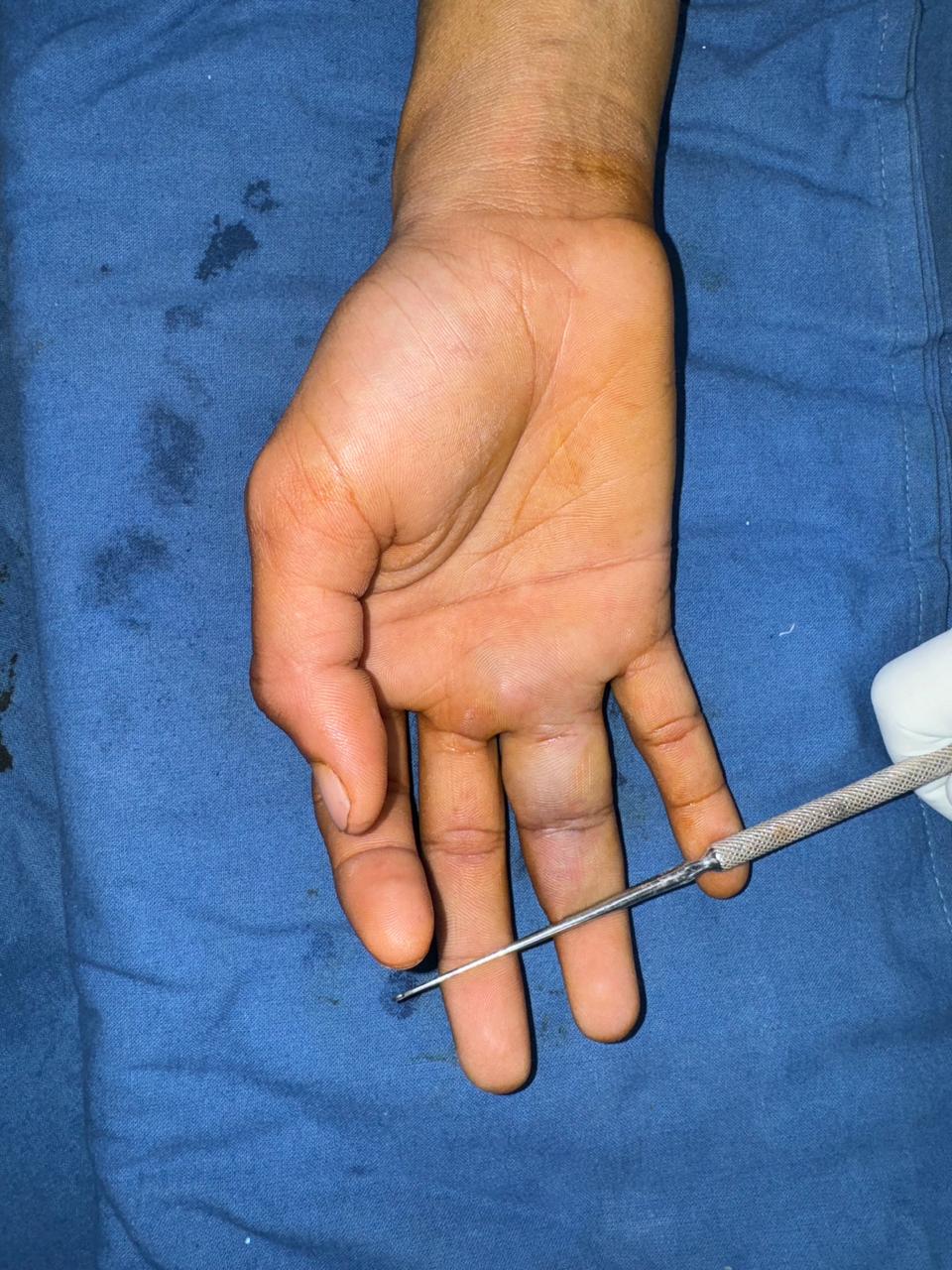
Whenever we have pain in our hand, we all think it’s just a sprain and will heal after a few days. Even though it is not completely wrong, as many pains go away naturally but waiting for too long can sometimes become a big issue. Some injuries can get worse slowly and by the time you go to the doctor, the treatment options get limited.
But it is not so easy to know which kind of pain you have. That is why here is an easy guide on what is normal and what is not normal so you can know when to see a wrist surgeon in Jaipur.
Why Wrist Problems Are So Hard to Understand
When we look at our hand, it looks like a normal joint. But it is not as eight small bones are arranged in a row, held together by ligaments, with nerves running through them and the main vein going to the palm side by a thin passage.
Even a small injury in one corner of the hand can cause pain in the whole wrist because everything inside it is so tightly packed. Sometimes two people have the same pain but their condition can be different.
What Usually Causes the Pain
We all know the most common reason for wrist pain is a fall. You slip in the bathroom or lose balance on a bike and all, it can cause the bones to crack and ligaments to tear.
Other types of causes happen slowly like working on a laptop for long hours, using a phone too much, sewing, cooking for a large family, exercising at the gym and all of these can put too much pressure on the tendons. Problems caused by these can not be solved at home. You will need to see a good wrist pain specialist who will examine the joint and offer you suitable treatments.
Red Flags: When to See a Wrist Surgeon in Jaipur
Don’t panic over every twinge. But do get checked if any of these sound familiar:
- The pain is still there after six to eight weeks of sensible care
- Your wrist looks crooked, swollen or has a visible bump after an injury
- Fingers go numb or tingle again and again
- You drop things or can’t twist open a bottle cap
- The joint clicks, catches or feels unstable
- You wake at night because of the pain
One of these alone isn’t a verdict. A few together are a reason to stop waiting. Nerves in particular don’t recover well if they stay squeezed for months.
Broken Wrists: Why Time Matters
One of the most common reasons for wrist surgery is a fracture. Some fractures are normal where bone remains in place and just normal treatment and rest are needed but some fractures are quite hard to treat as bone fragments are separated and get broken into small pieces that usually need screws or wires.
Many people make the same mistakes that make their fracture get worse like applying a bandage to a sprain and all which makes the bones move in the wrong direction. That is why whenever you think you broke your wrist, foot and ankle surgeon in Jaipur is important to have proper treatment on time.
Problems That Often Need Surgery
- Displaced fractures
If the broken ends aren’t lined up, surgery repositions and secures them.
- Scaphoid fractures
There is a little bone close to the thumb that has a bad blood supply. It heals slowly, sometimes not at all so surgery is usually a safe option.
- Advanced carpal tunnel syndrome
If numbness is constant or the thumb muscle looks thinner, a short release procedure frees the nerve.
- Ligament or TFCC tears
When a splint doesn’t help, keyhole surgery can repair them.
- Cysts that keep returning
Removal is helpful if it causes pain and problems with the nerves.
- Unbearable arthritis
When medicines and injections stop working you should get surgery because it can reduce pain and keep the wrist useful.
How the Decision Gets Made
A careful surgeon won’t say operate in the first five minutes. The first visit is mostly all about talking about your job, your dominant hand, how it started, and what makes it painful. Then comes a hands on check of movement, grip and feeling in the fingers and then they do an X ray, ultrasound, MRI or CT scan if needed.
Unless the injury is urgent, treatment without surgery comes first. And a straightforward wrist pain specialist will also tell you what an operation can’t do, so you’re choosing with open eyes.
What Modern Wrist Surgery Looks Like
Not as scary as people imagine. Arthroscopy uses cuts the size of a buttonhole and a camera about as thin as a pen refill. Broken bones are fixed with small plates and screws. A trapped nerve can be removed through a short incision. Torn ligaments can be repaired or rebuilt and badly worn joints can be replaced. Smaller cuts usually have less pain and can heal with an easier recovery.
Recovery: What to Expect
You’ll wear a splint or cast for a few weeks. Your fingers keep moving from day one, because stiffness creeps in faster than you’d think. Physiotherapy follows to bring back strength and motion. Desk work may resume fairly soon, but lifting, gym sessions and cricket have to wait.
For your surgery you will get a proper schedule from a wrist surgeon in Jaipur. The patients who stick to it and resist the urge to rush almost always do better.
Conclusion: Picking the Right Wrist Surgeon in Jaipur
Not all wrist pain is normal. That is why you should not delay getting the right treatment from the best doctor and for that, ask yourself a few things. Does the doctor treat day to day hand and wrist problems? Make sure they show you your scan and explain it in easy language and you can get imaging, surgery and physiotherapy all in one place so it can save you time.
If your trouble involves the fingers, tendons or nerves of the arm, a Hand Surgeon in Jaipur can look at the bigger picture. And if you also have heel, toe or ankle pain, Wrist Fracture Specialist can offer you the best treatment.
FAQs
1. Can wrist pain go away without surgery?
Usually, yes. Many times, with help of rest, medicine and physiotherapy, most of the pain can be healed without surgery.
2. When should I see a wrist surgeon in Jaipur?
If your pain does not get healed after one or two weeks and you feel pain or swelling in your hand, you should go to the doctor without making any further delay.
3. Does wrist surgery hurt?
You would not feel any pain during the operation as you will be given anaesthesia however, some pain after the surgery can occur, but it is normal and can go away with medicines.
4. Why choose a Wrist Fracture Specialist over a general doctor?
A wrist pain specialist deals with all types of wrist pain every day, so they will have more accurate knowledge about the wrist and will offer more suitable treatment.
5. Can exercise alone avoid surgery?
For normal problems, exercise can help avoid surgery but it cannot fix big issues like a big fracture and all.