This is because it is a well-liked subject and has already featured in several journals and magazines.
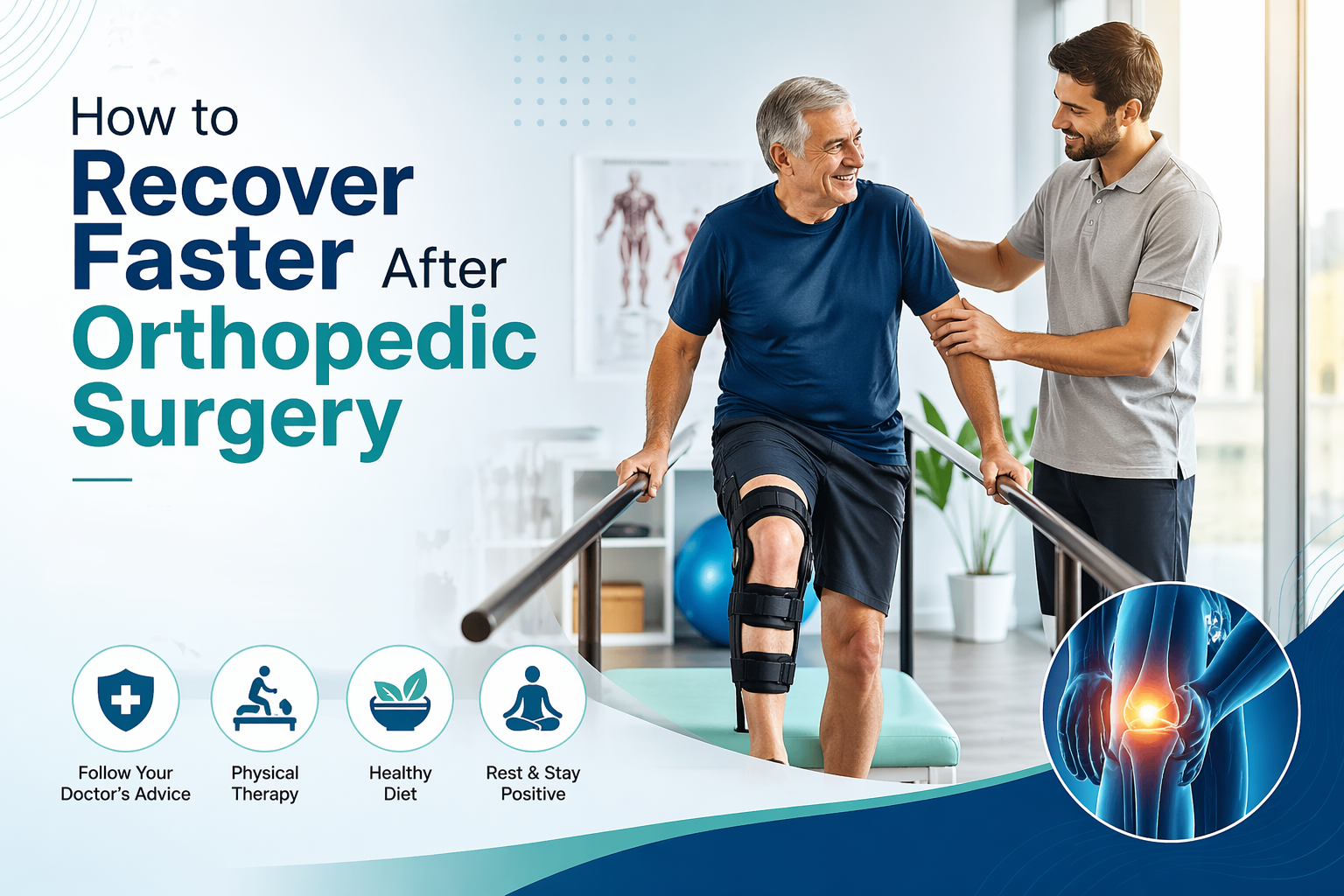
It might sound challenging to heal following an orthopedic surgery, yet with the necessary attitude, you will manage to heal sooner and be back on your regular lifestyle sooner. It may be a knee replacement, a fracture repair, or even a ligament surgery, but proper recovery measures should be taken.
Dr. Girish’s guide includes How to Recover Faster After Surgery, practical Tips to Recover Faster After Surgery, and an outline of a clear Recovery Timeline After Orthopedic Surgery to help you keep track.
The Importance of Recovery Following Orthopedic Surgery.
Orthopedic surgery is surgery of the bones, ligaments, joints, and muscles, all of which require time and attention to heal. Premature recovery or not adhering to medical advice can lead to such complexities as rigidity, infection, or slow recovery.
An organized recovery program guarantees:
- Faster healing
- Less pain and swelling.
- Increased movement and muscle power.
- Reduced chances of complications.
The Recovery is Faster After Surgery.
These are crucial measures to aid a faster and easier recovery:
1. Adhere to the Instructions of Your Doctor.
Every operation is individual, and thus one-on-one guidance is noteworthy. Take medications as directed and follow up on appointments.
Example: ACL surgery: This is because when you fail to go through physiotherapy, walking ability may take longer to normalize.
2. Give Sleep and Rest a priority
It is during rest that your body mends itself. Goal: 7-9 hours of good sleep each day.
3. Maintain Proper Nutrition
One of the most important components of healing is to eat well.
Include:
In tissues, proteins (eggs, chicken, and lentils) are repaired.
Vitamin C (oranges, lemons) strengthens collagen.
Strength of the bones—calcium (milk, paneer).
4. Stay Hydrated
Water aids in cleansing out toxins and aids in the general healing.
5. Manage Pain Effectively
Take prescribed painkillers and ice packs as advised. Pain should not be neglected because it may restrict movement and retard recovery.
Tips for Faster Healing After Surgery
To get better, you need only little things that you can do every day:
✔ Start Physiotherapy Early
Directed movements will aid in re-establishing motion and avoiding rigidity.
Example: Simple bending exercises enhance the flexibility in weeks after knee surgery.
✔ Keep the Surgical Area Clean
Wound care decreases the chances of infection.
✓ Smoking and Alcohol.
They both have the ability to delay healing and complicate matters.
✔ Use Support Devices
Crutches, braces, or walkers can be used to help you move safely during recovery.
✔ Be Hopeful and Tolerant.
Mental health is important. Stress may delay recovery, and therefore, keep a positive attitude.
Postoperative Orthopedic Rehabilitation.
The time to recover is different based on the operation type, age, and general health. The following is a rough schedule:
Week 1-2: First Healing Period.
Pain and swelling are common.
Example: A patient who has undergone hip replacement can probably walk on his/her own in 6-8 weeks, but complete recovery will be achieved in 6 months.
Week 3–6: Mobility Improvement
Slow progress of motion.
Physiotherapy is made more dynamic.
Less pain and swelling.
Week 6–12: Strength Building
Improved mobility and strength
Go back to normal daily activities.
3–6 Months: Functional Recovery
The majority of patients resume normal movement.
Routine work or resume.
6–12 Months: Full Recovery
Full recovery and restoration of strength.
Examples: A patient that has undergone hip replacement may be in a position to walk on his/her own after 6-8 weeks, but complete recovery will be achieved after 6 months.
Do’s and Don’ts After Surgery
Safe healing is important through following the right habits.
Do’s
Follow your doctor’s advice
- Take medications at the right time.
- Become used to exercising regularly.
- Eat a balanced diet
- Keep follow-up appointments
Don’ts
- Don’t skip therapy
- Do not sit/lie in one position so long.
- Neglect not abnormal pain and swelling.
- Avoid self-medication
Examples: Lifting heavy weights too soon after shoulder surgery may be risky because it may damage the tissues that are in the process of repair.
Exercises to do after orthopedic surgery.
Exercise is also necessary, although it needs to be done cautiously and with supervision.
1. Range of Motion Exercises.
Assistance to enhance flexibility and movement of the joints.
Case in point: Straightening and bending of the knee after knee surgery.
2. Strengthening Exercises
Muscle support of the affected area.
Example: Shoulder surgery, light resistance band exercises.
3. Walking
It is one of the most effective and the safest recovery exercises.
4. Stretching
Eliminates stiffness and enhances flexibility.
5. Low-Impact Activities
- Swimming
- Cycling
When your doctor permits it, these are best.
Missteps to steer clear of when recovering.
Ignoring physiotherapy
Going back to work prematurely.
Malnutrition and water shortage.
Not taking medications properly
Overexertion
Example: Patients who do not receive rehab usually take longer to regain normal mobility.
Contact Your Doctor.
Attend to a doctor in case you observe the following:
Pain or swelling that is severe.
Symptoms of infection (redness, fever)
Pain on movement of the joint.
Abnormal exudate of the wound.
Read Also – Foot and Ankle Pain: Causes, Effective Treatment and Symptoms
Final Thoughts
Orthopedic surgery is not a quick solution and, hence, takes time to heal. With these tips to heal faster after surgery, understanding recovery timelines after orthopedic surgery, and following proper dos and don’ts, you can significantly enhance your healing process. If you are looking for expert care, consulting an experienced orthopedic surgeon in Jaipur like Dr. Girish Gupta can ensure the right guidance and a smoother recovery journey.